Keep mahjong night on the calendar.
Pongo gets your people to a real table. Propose the night, see who's in and who's bringing tiles, then tap Game on. No more chasing replies in the group text.
American and Chinese mahjong. Every level. No ads, no subscriptions.
- Who's in for Thursday?
- maybe! depends on the kids
- wait, I thought we said Friday?
- can someone bring tiles
- + 10 more replies
Fourteen replies. Three maybes. Nobody knows if it's on.
Every group has a host who keeps the game alive by chasing everyone else. One missed week becomes two, and the regular night quietly stops. Pongo gives the host one place to ask and everyone one clear answer.
Propose. Answer. Game on.
-
01
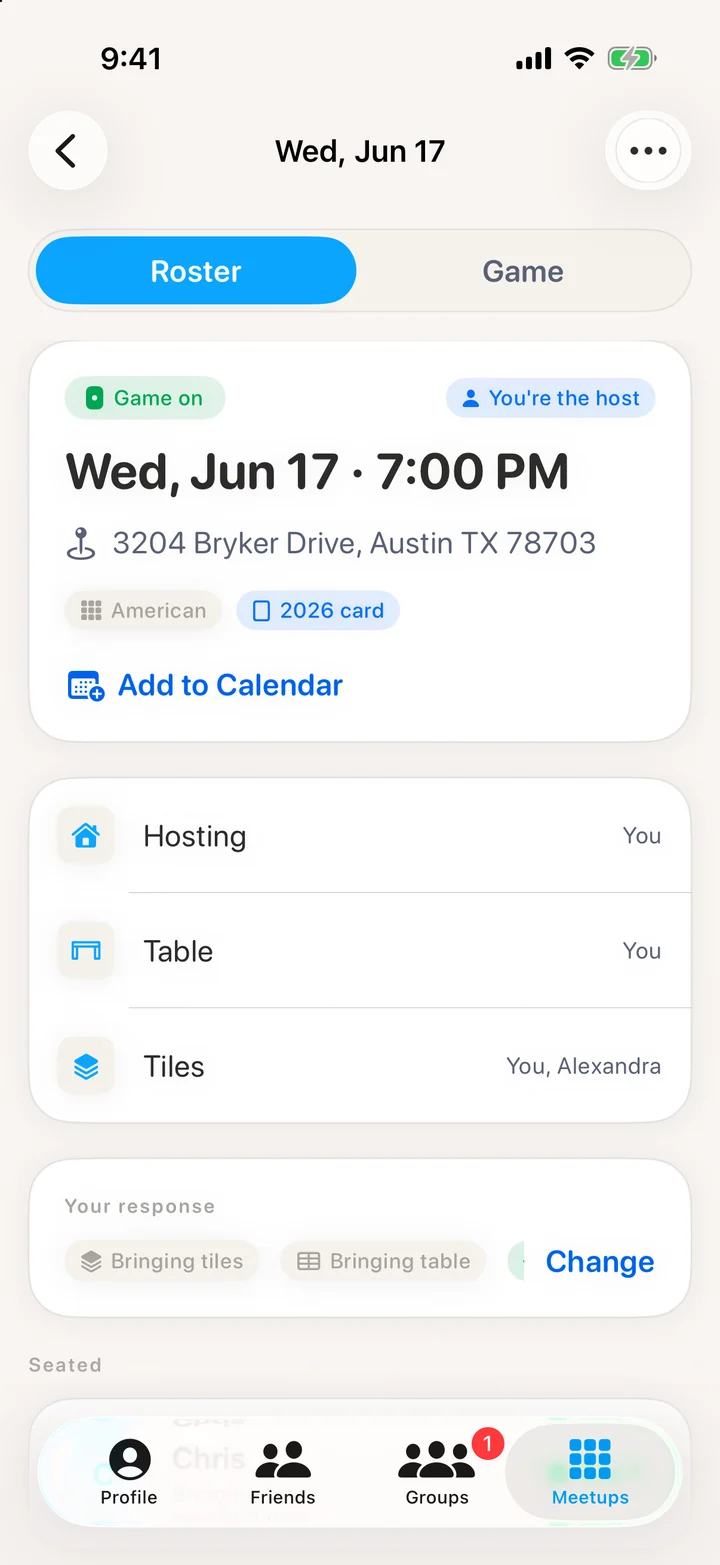
Propose the night
Pick a date, a time and a place. Note the style you're playing, then invite friends one at a time or a whole group at once.
-
02
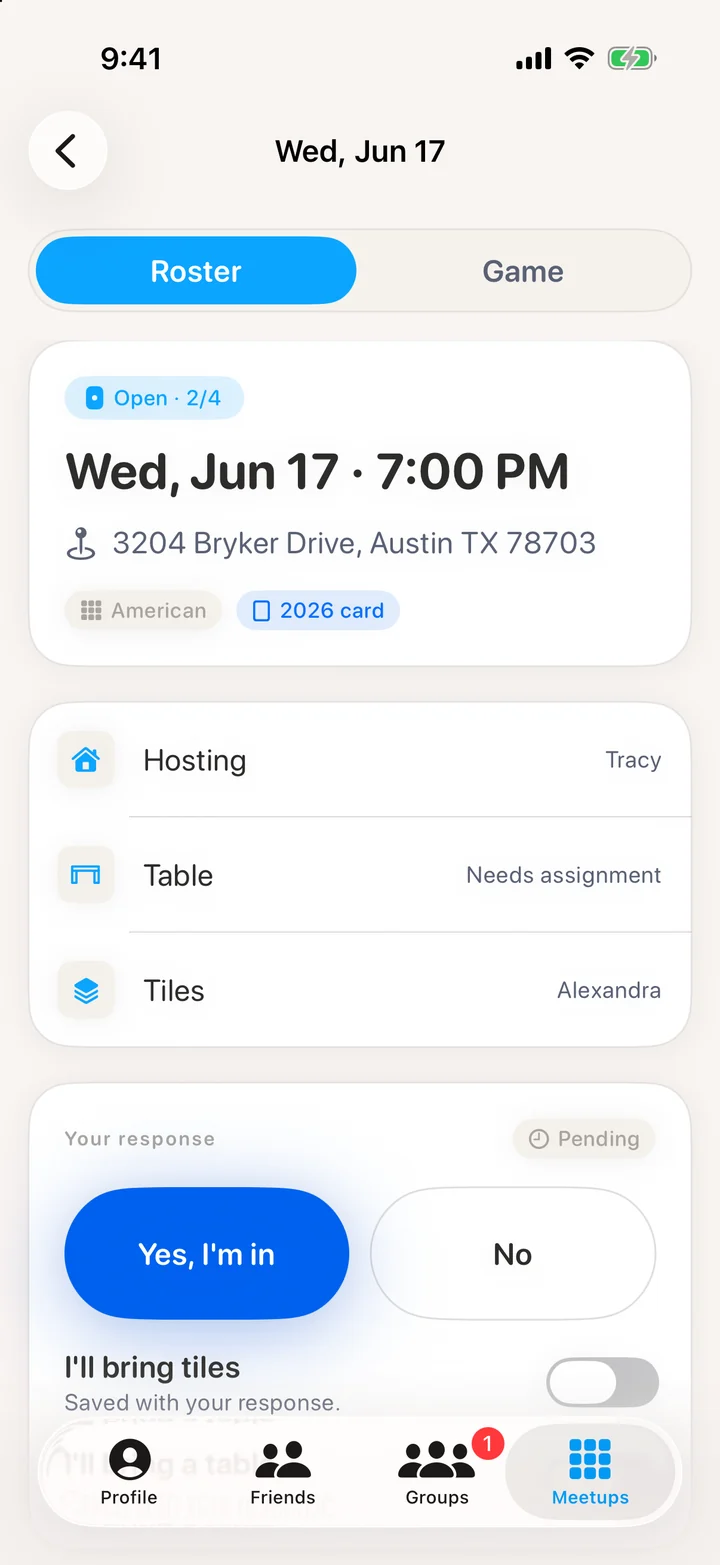
Everyone answers
Friends tap Yes or No and say whether they're bringing tiles or a table. Four yeses fill the table on their own. Later yeses go on the waitlist.
-
03
Game on
The host starts the meetup when the table is ready, at any headcount. Add it to your calendar with one tap.
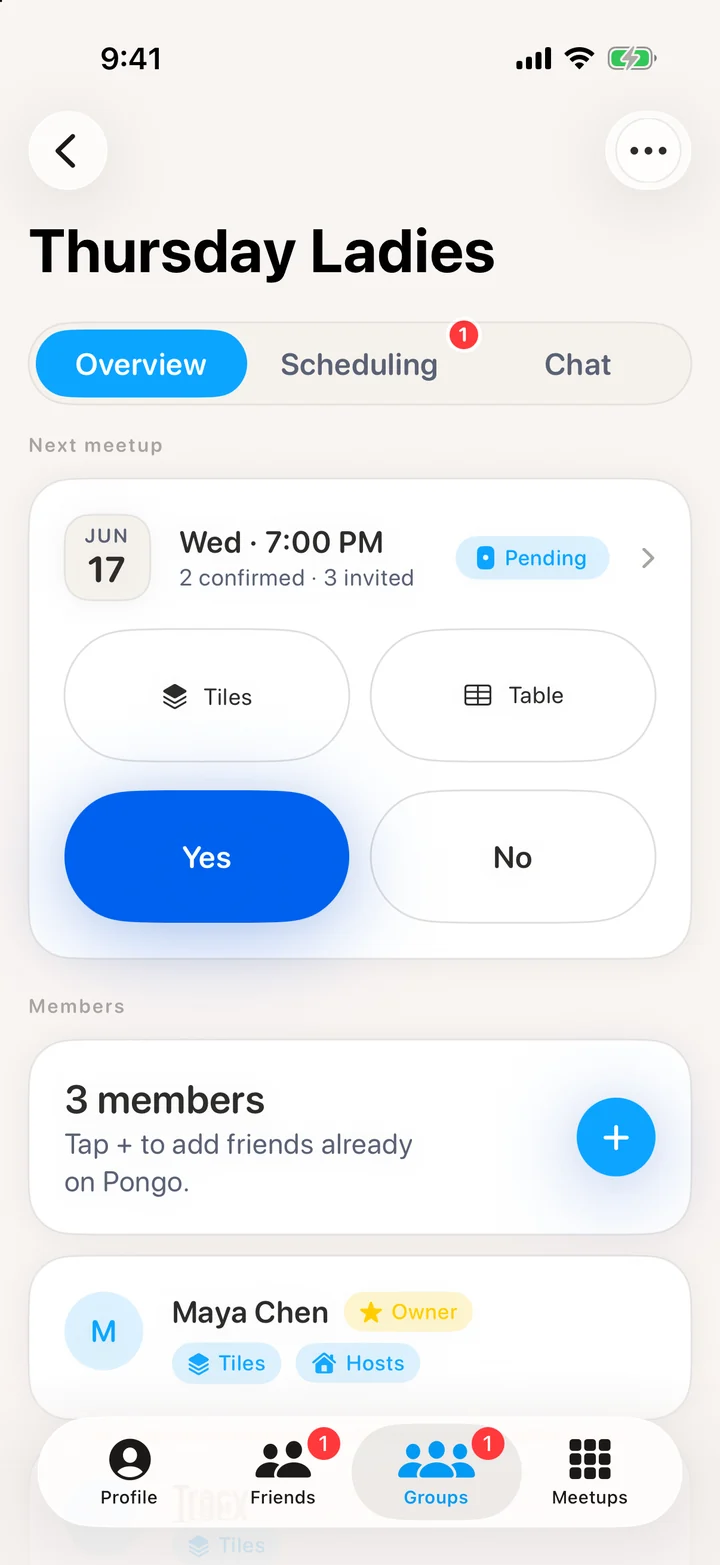
Your group, in one place.
Save the friends you play with as a group. Invite everyone at once, see the next meetup, answer from the group, and keep talking in group chat between games.
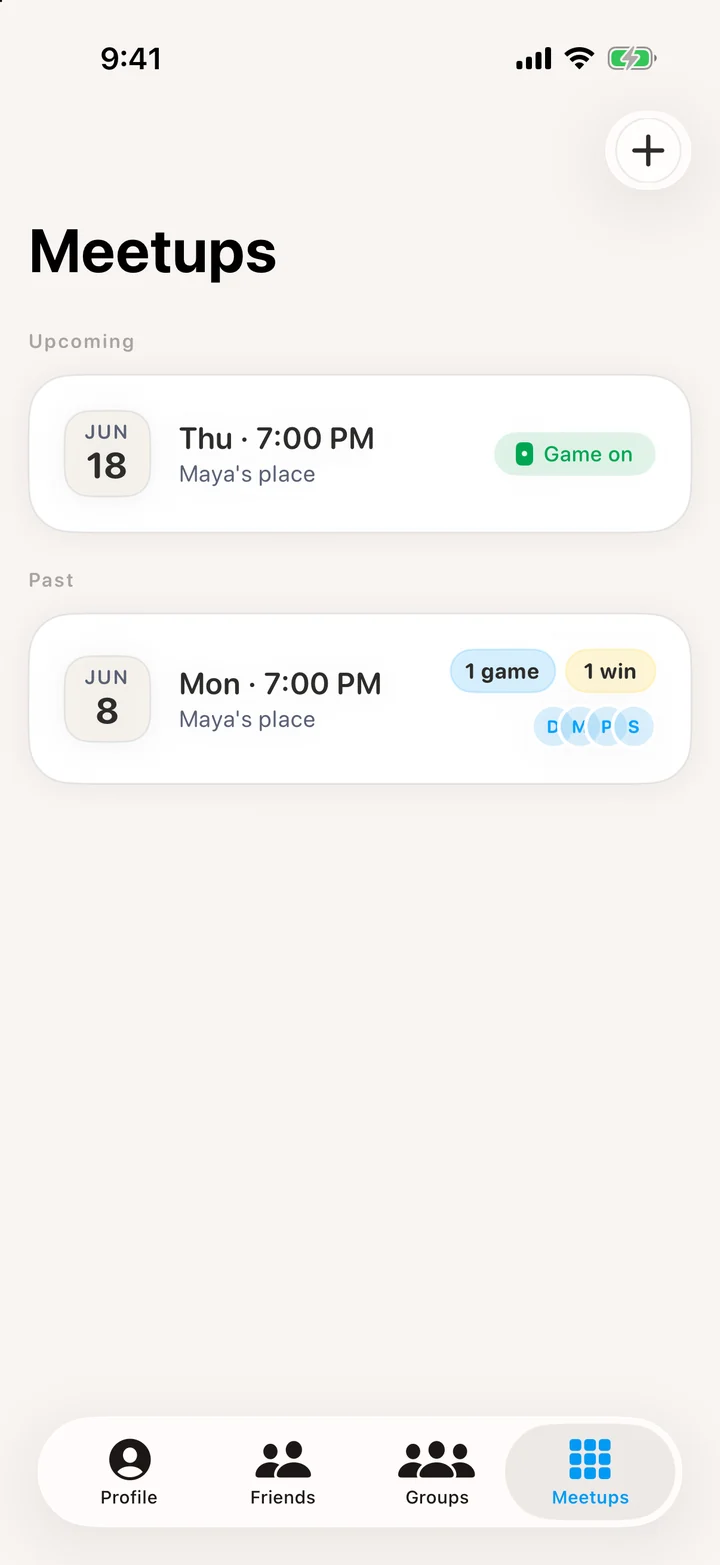
Every game, remembered.
After the night, record each game: the winner first, then the hand, the score and a photo if you want them. Games and wins add up on your profile on their own.
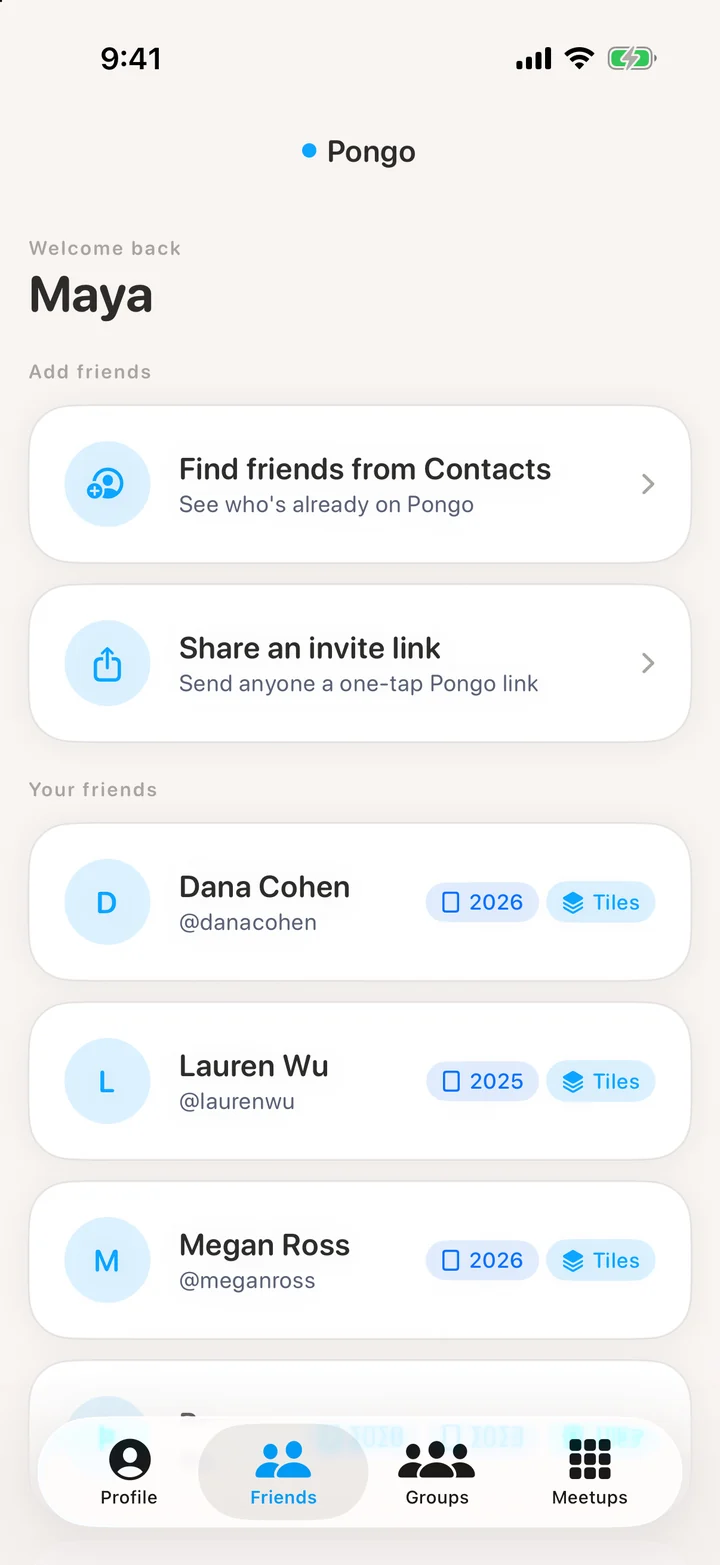
Bring your whole table.
Pongo is built around the people you already play with. Find the ones already here, and send everyone else a link.
- From your contactsSee which of your contacts are already on Pongo. Your address book is not stored.
- With a linkSend anyone a one-tap invite by text or any app you like.
- Only when you askPongo adds a meetup to your calendar when you tap the button, never on its own.
- Notifications that matterInvites, new friends, group messages and results. Not every RSVP.
A game that belongs to the people who built it.
Mahjong was born in Qing-dynasty China and travelled the world with Chinese diaspora communities. In the United States, generations of Jewish-American women built American Mahjong and the National Mah Jongg League into a parallel tradition of their own.
Pongo respects both lineages. We don't modernize or fix the game. We make the night around it easier to keep.
Questions, answered.
Is Pongo really free?
Yes. Pongo is free on iPhone, with no paywall, no in-app purchases, no subscription and no ads.
Which mahjong styles does Pongo support?
American (NMJL) and Chinese mahjong, and players who play both. Each meetup notes the style you're playing, so everyone arrives ready for the same game.
Do we need four players to start?
No. The host can start a meetup at any headcount. When four people say yes, the table fills on its own, and anyone who says yes after that goes on a waitlist.
Do I need to own tiles?
No. When you answer an invite you can say whether you're bringing tiles or a table, so the host can see the night is covered.
I'm a beginner. Will Pongo work for me?
Yes. Pongo organizes real games rather than teaching the rules, so it works the same at every level. You can note how long you've played when you set up your profile.
Does Pongo have group chat?
Yes. Every group has its own chat, so the conversation stays with the people you play with. You can report a message or block a player from inside the chat.
Will Pongo change my calendar?
Only when you ask. A confirmed meetup has an Add to Calendar button. Pongo never adds, changes or removes calendar events on its own.
Is there a mahjong app for iPhone?
Yes. Pongo is a free mahjong app for iPhone, in beta, for iOS 18 and later. It's built for real-world mahjong groups rather than playing against a computer: you schedule the game, see who's coming, and record who won.
Is Pongo a mahjong scheduling app?
Yes. Scheduling is what Pongo does first. Propose a date, time and place, and everyone answers in one place instead of a scattered group text. The host starts the game when the table is ready.
Is Pongo a mahjong scoring app?
Yes, in a deliberately light way. A meetup can hold several games, and each is recorded winner first. The hand, the score and a photo of the winning hand are optional, because most groups only track who won. Games played and wins add up on each player's profile.
When can I download it?
Now. Pongo Meetup is free on the App Store for iPhone running iOS 18 or later. It's in beta: real and usable today, and still improving quickly.
Get your group back to the table.
Free on iPhone. iOS 18 or later.